
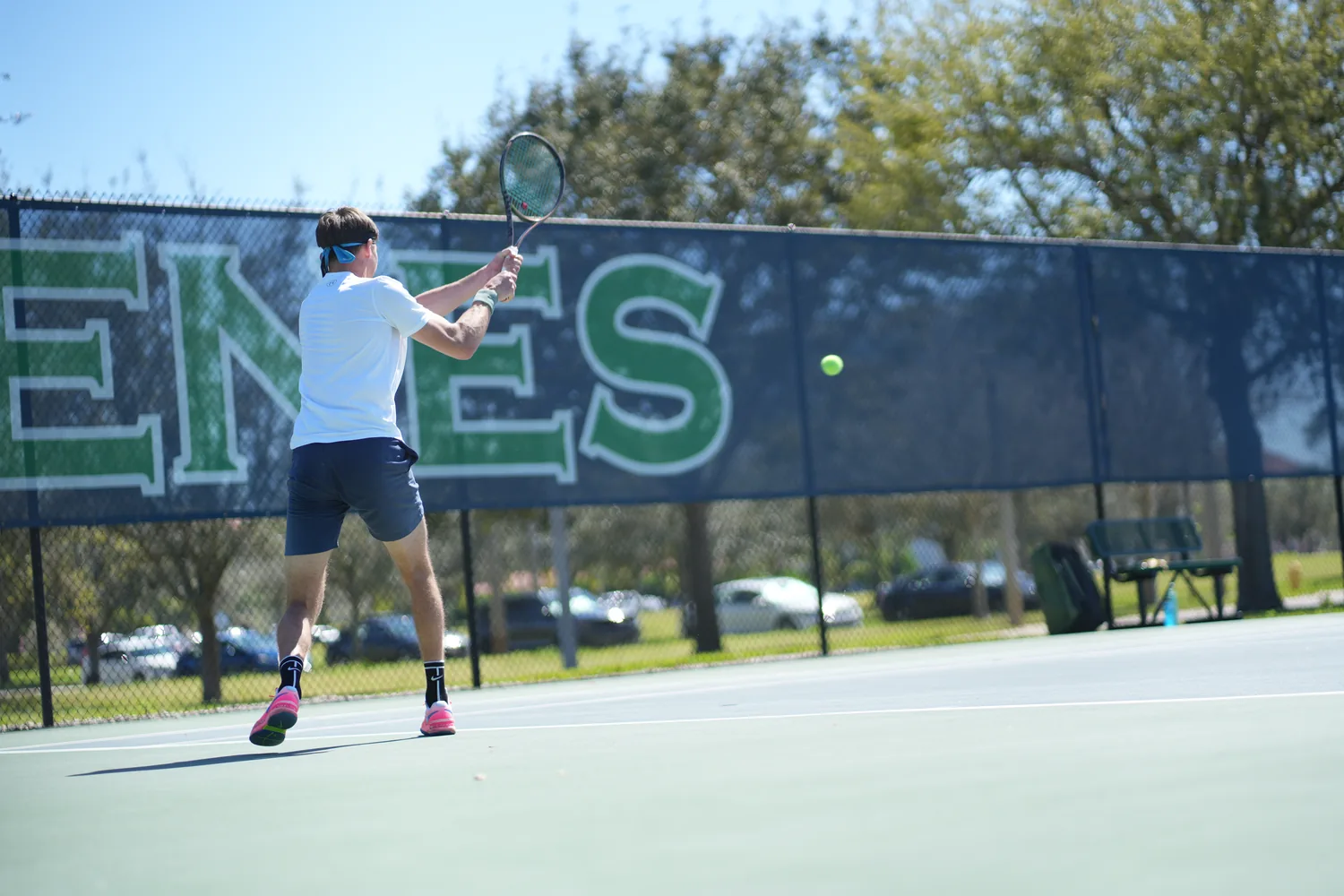
Every year, talented juniors miss out on college tennis for reasons that have nothing to do with how well they play. They email too late, or they email 300 coaches with the same message, or they spend two years chasing a rating and never once send a coach a video. Meanwhile, players ranked below them end up on rosters.
College recruiting is not a mystery, but it is a process, and it rewards players who understand what a coach is actually trying to solve. Here is what that looks like from the other side of the desk.
A coach is filling a lineup, not collecting the best players
This is the single most useful thing to understand. A college coach has a limited number of spots, a budget, and six singles positions plus three doubles teams to fill. They are not asking “is this player good?” They are asking “does this player help me win at line four next season, and can I afford them?”
That reframes everything. It explains why a coach might pass on a stronger player and take you: because you fill a gap, you fit the budget, or you look like you will still be improving in two years. It also means being realistic about level is not pessimism — it is how you find the programs where you are genuinely wanted rather than tolerated.
UTR is the first filter, and it is not the whole story
Universal Tennis Rating has become the common language of recruiting, largely because it is the only number that compares a player in Florida to a player in Belgium in a way coaches trust. Expect it to be the first thing a coach checks.
What matters more than the number itself is the shape of it. A coach looks at whether your rating is climbing, how reliable it is (a rating built on very few matches is treated with caution), and the quality of the results underneath it. A player who beat two people well above their level tells a different story from one with the same rating and no signature wins.
The practical consequence: play matches, and play up. Competing against stronger opponents and losing respectably moves your rating and your credibility more than beating players you should beat.
The trap: avoiding tough draws to protect a rating is the most common self-inflicted recruiting wound in junior tennis. Coaches can see what you entered and what you avoided.
What coaches look for in video
Almost no coach will fly to watch you before they have watched you online. Your video is your interview, and most junior videos are made badly.
Coaches do not want a highlight reel of winners. They want to evaluate whether you can play, which means they are looking at:
- How you move between shots — the split step, the recovery, whether you are balanced when you strike. Movement is the hardest thing to teach and the easiest thing to see.
- Your second serve. This is the shot that decides college matches, and coaches will scroll straight to it. A first serve that lands is nice; a second serve you can hit under pressure is a scholarship.
- Whether your game projects. Does it look like it will still work at a faster, more physical level, or does it depend on opponents making errors?
- What you do between points. Body language after a bad miss says more about how you will handle a college season than any winner in the reel.
Practically: film from behind the baseline, elevated if you can, in one continuous match segment. Give them two or three uncut games rather than thirty edited seconds. Coaches trust unedited footage precisely because it cannot hide anything.
The email that actually gets answered
Coaches receive an enormous volume of generic recruiting emails and delete most of them within seconds. The ones that get read share a few features: they are addressed to that coach by name, they say something specific about that program, and they contain the information a coach needs to make a decision without replying to ask for it.
That means, in the first email: your graduation year, UTR, recent results, academic profile (GPA and test scores if you have them), your video link, and a sentence on why their program. Short. No attachments. No mass CC.
And then follow up when you have news — a result, a rating jump, a new video. Recruiting is a relationship built over months, and the players who stay visible are the ones who get remembered when a spot opens up unexpectedly in the spring.
Academics decide more than players think
At a great many programs, particularly D2, NAIA and academically selective schools, your GPA is not a formality — it is leverage. Academic money is often easier for a coach to find than athletic money, and a strong transcript can turn a player they liked into a player they can actually afford.
It also matters for eligibility. If you are targeting D1 or D2, register with the NCAA Eligibility Center early and understand the core-course requirements rather than discovering them in your final year. International players have an additional layer of paperwork and amateurism review, and it takes longer than anyone expects.
D1 is not the only good outcome
Florida is one of the deepest college tennis landscapes in the country, and that depth exists across every division. Strong D2 and NAIA programs regularly field players who could have sat at the bottom of a D1 roster and never played a match. Playing line two at a good D2 school is a far better four years than practising with a D1 team and travelling occasionally.
JUCO deserves the same reconsideration. Two years of playing every match, improving, and raising your rating is a legitimate and well-worn route into a four-year program — and it is often the smart play for a late developer.
The timeline, roughly
Recruiting rules and contact dates shift, so verify the current NCAA calendar for your division and graduation year rather than relying on what an older player told you. But the useful general shape is this: build results and a video from sophomore year, begin serious outreach in junior year, and expect most offers to land between the summer before senior year and the following spring. Late spring is also when unexpected roster spots appear — which is why the players still in contact with coaches in March do well.
What we do about it
The high-performance program is built around this, and the core of it is individual on-court coaching — private sessions built around one player’s game, week after week, aimed squarely at the level they are trying to reach. Around that sits tennis-specific strength and conditioning, and testing that turns “get fitter” into numbers you can actually train against.
The recruiting side is part of the work rather than an afterthought: what to enter, what to film, when to email, and an honest read on which programs are realistic. That last one is worth more than most people expect — a clear-eyed target list beats a hopeful one every time.
Come and try it.
Groups cap at six players, so everyone gets real reps. Pick a session that suits your week and come and play.
See the schedule
Comments
Got a question about this, or something to add? Leave it below — comments are read and published by hand, so give it a day or so to appear.